- Home »
- Tubulin & FtsZ Products »
- Antibodies
Antibodies
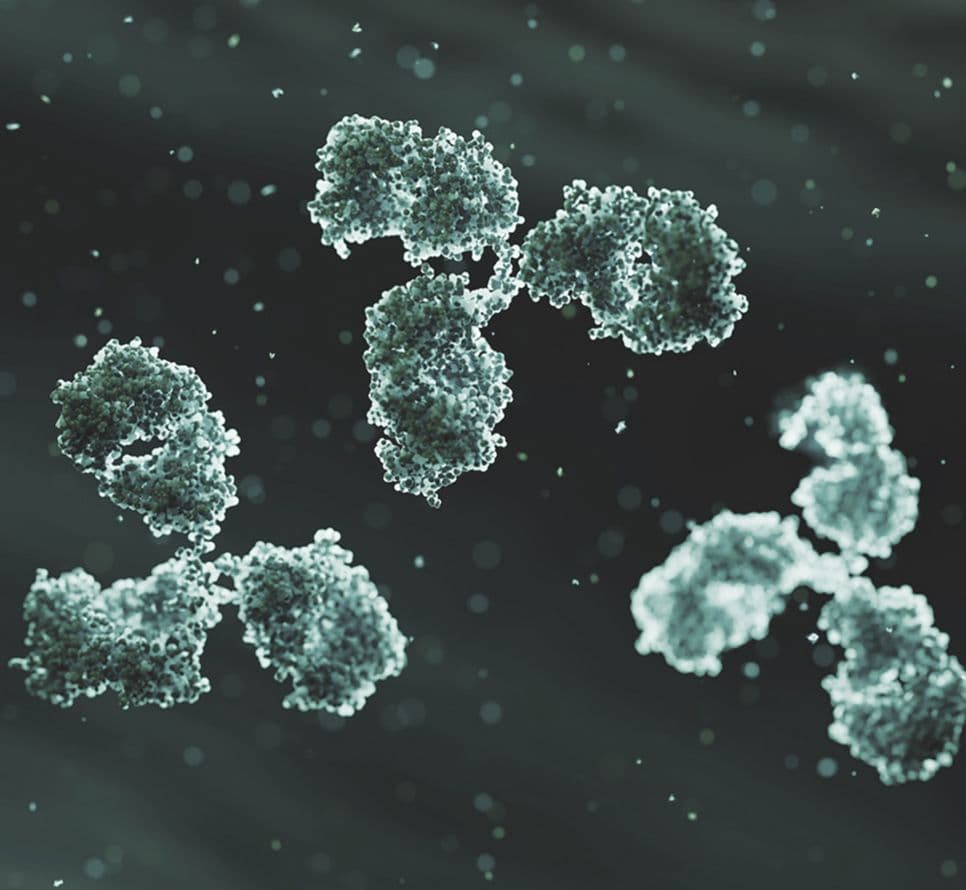
Cytoskeleton provides a sheep polyclonal tubulin antibody which recognizes the whole alpha/beta complex of all species from yeast to mammals. It detects methanol fixed (denatured conformation) and paraformaldehyde fixed (native conformation) tubulin in microtubule or the α/β subunit form. See the datasheet below for more information about this antibody.
In addition for staining the actin cytoskeleton, we have developed a unique line of fluorescent phalloidins with improved brightness and stability compared to other conjugates such as Alexa fluor and Cy dyes, for more information see the Acti-stain information page.
For product Datasheets and MSDSs please click on the PDF links below. For additional information, click on the FAQs tab above or contact our Technical Support department at tservice@cytoskeleton.com.
Cytoskeleton's antibodies products have been cited hundreds of times over the past 18 years. A select few are described here, for more citations on individual products please use the "Citations" tab on each individual product page.
Anti-alpha/beta tubulin: sheep polyclonal (Cat. # ATN02) |
|
Sangrar, W., Zirgnibl, R. A., Gao, Y., Muller, W. J., Jia, Z. and Greer, P. A. (2005). An identity crisis for fps/fes: oncogene or tumor suppressor? Cancer Res. 65, 3518-3522. |
|
Rawe, V. Y., Payne, C., Navara, C. and Schatten, G. (2004). WAVE1 intranuclear trafficking is essential for genomic and cytoskeletal dynamics during fertilization: cell-cycle-dependent shuttling between M-phase and interphase nuclei. Dev. Biol. 276, 253-267. |
|
Sanbe, A., Osinska, H., Saffitz, J. E., Glabe, C. G., Kayed, R., Maloyan, A. and Robbins, J. (2004). Desmin-related cardiomyopathy in transgenic mice: a cardiac amyloidosis. Proc. Natl. Acad. Sci. U. S. A. 101, 10132-10136. |
|
Wang, S., Liu, Y., Adamson, C. L., Valdez, G., Guo, W. and Hsu, S. C. (2004). The mammalian exocyst, a complex required for exocytosis, inhibits tubulin polymerization. J. Biol. Chem. 279, 35958-35966. |
|
Ding, J., Liu, J. J., Kowal, A. S., Nardine, T., Bhattacharya, P., Lee, A. and Yang, Y. (2002). Microtubule-associated protein 1B: a neuronal binding partner for gigaxonin. J. Cell Biol. 158, 427-433. |
|
Krichevsky, A. M. and Kosik, K. S. (2001). Neuronal RNA granules: a link between RNA localization and stimulation-dependent translation. Neuron 32, 683-696. |
Question 1: What is the best way to fix cells for staining with the polyclonal tubulin antibody?
Answer 1: Fix cells with methanol at -20°C for 3 min. . See the ATN02 datasheet for the full protocol.
Question 2: What dilution do you recommend for the polyclonal anti-tubulin antibody?
Answer 2: The dilution of antibody depends on the cell/tissue type and experimental format being used. For western blotting, we have tested and recommend using the antibody at a concentration of 500 ng/ml (1:1000 dilution). At this dilution, we detected tubulin in extracts of Drosophila S2 cells, Xenopus A6 cells, mouse Swiss 3T3 cells, rat NRK cells, human HeLa cells, and bovine brain. For immunofluorescence, we used the anti-tubulin antibody to detect tubulin in mouse Swiss 3T3 cells. The antibody was used at a concentration of 2.5 μg/ml (1:200 dilution) followed by incubation with a 1:500 dilution of anti-sheep rhodamine-conjugated secondary antibody. This information is found usually in the figure legends or within the “Product Uses” section of our antibody datasheets.
For more information, click on the Document tab above to see the datasheet.
|
1 Item(s)
Grid List
-
Anti-alpha/beta tubulin: sheep polyclonal
Price: $0.00
1 Item(s)
Grid List
Browse Products
You have no items in your shopping cart.
You have no items to compare.
-
5/3/13Life Inside a Microtubule Read more
-
3/31/13Tau PTMs as Therapeutic Targets Read more