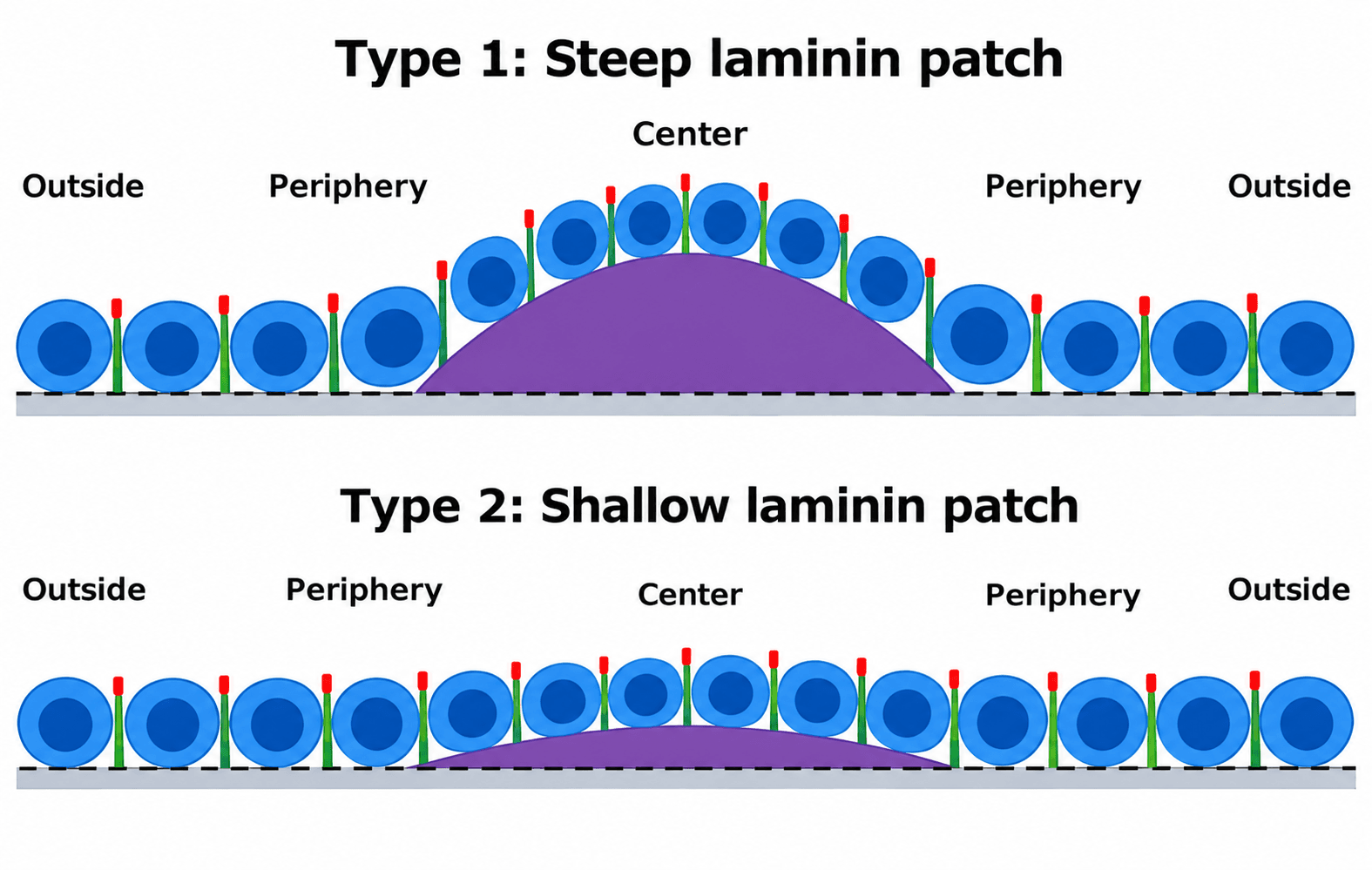
In tissue, a unified apical surface formed by epithelial cells helps to resist external stressors, and loss of this formation is seen in several types of cancer. The mechanisms that regulate the flatness of a steady-state epithelium are still under investigation. Hu et al. recently examined this question and found that apical and basal layer regulation may not be as tightly linked as expected; rather, an actomyosin network may regulate apical flatness. Preliminary immunofluorescence studies in MDCK cells were performed to establish macro- and micro-height parameters to capture loss of apical flatness. Additionally, trans-epithelial electrical resistance measurements tracked similarly to epithelial flatness at peak confluency. Cytoskeletal inhibitors were tested to establish their role in epithelial flatness. Cytochalasin D, an actin disruptor, affected both micro- and macro- height, while nocodazole (microtubule targeting) and withaferin A (intermediate filament targeting) had more targeted effects on either the micro-height or macro-height, respectively. As actin disruption had the most profound effect on epithelial apical flatness, the group used an assortment of inhibitors and transgenic studies to disrupt the actomyosin contractile network, which revealed an important noncontractile role for myosin in the regulation of apical flatness. Surprisingly, the group also found that effects on the basal surface through changes in ECM did not affect apical flatness. However, the steepness and topography of the ECM could affect how the MDCK cells responded, which could affect the apical surface flatness. This study identifies several important cellular processes that were important for regulating epithelial apical flatness, which may be important in health and disease. Cytoskeleton Inc.’s fluorescently labeled laminin (Cat. # LMN01) was an essential tool used in their ECM studies to understand the impact of ECM changes on epithelial apical flatness.
Link to Citation:
Product Used in Citation: