- Home »
- Activation Assays »
- G-LISA Assays »
- G-LISA Ras Activation Assay Biochem Kit (Absorbance Based)
G-LISA Ras Activation Assay Biochem Kit (Absorbance Based)
Product Uses Include
- Ras signaling pathway studies
- Ras activation assays with primary cells
- Studies of Ras activators and inactivators
- Ras activation assays with limited material
- High throughput screens for Ras activation
Introduction
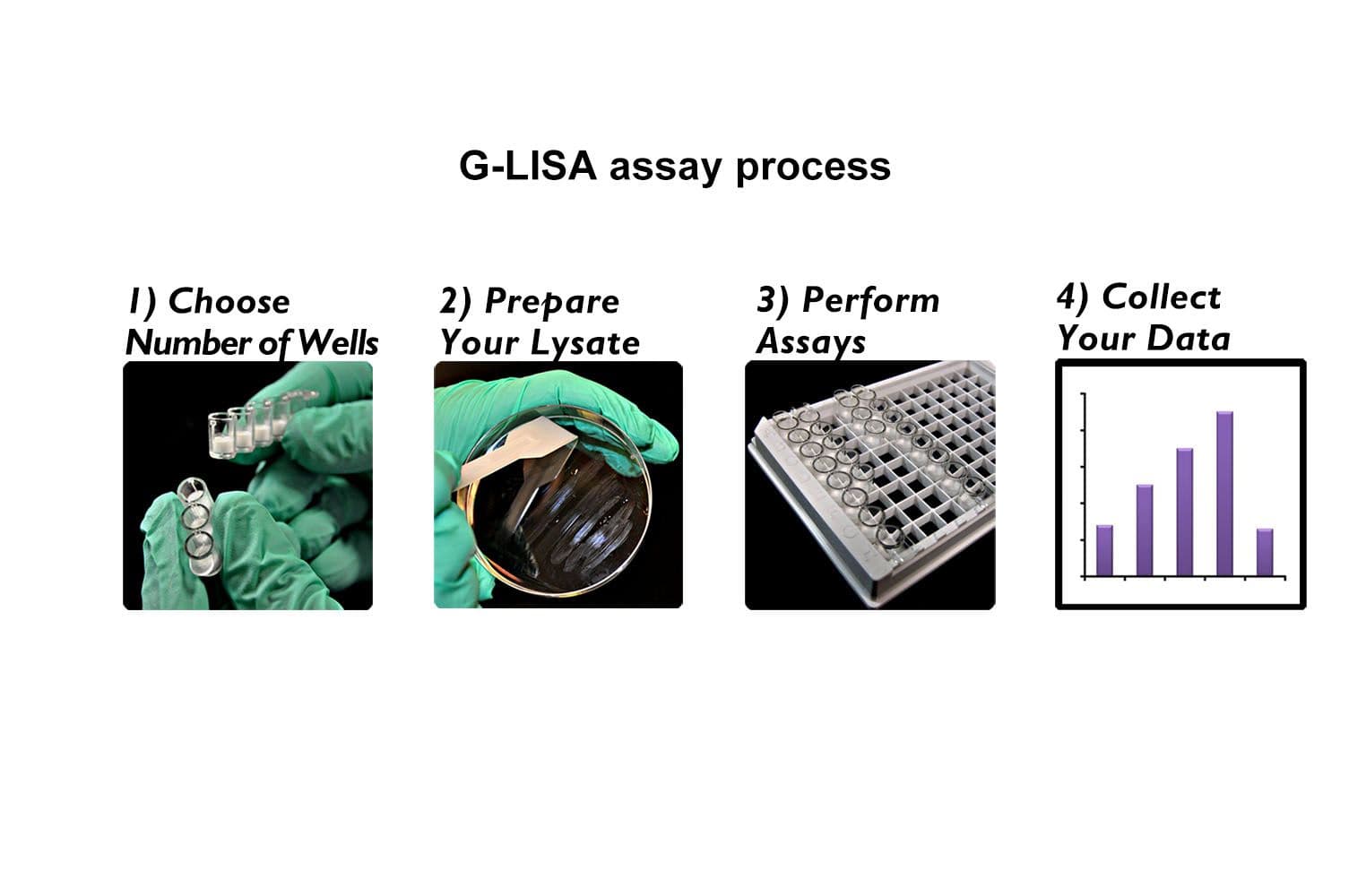
With the new Ras G-LISA™ kit you can now measure Ras activation from cell and tissue samples in less than 3 h. G-LISA™ requires only 1-5% of the material needed for a conventional pull-down assay. You will also be able to handle large sample numbers and generate quantitative results. For a more detailed introduction on G-LISA™ assays and a listing of other available G-LISA™ kits, see our main G-LISA™ page.
The Ras G-LISA™ kit contains a Ras GTP-binding protein linked to the wells of a 96 well plate. Active, GTP-bound Ras in cell/tissue lysates will bind to the wells while inactive GDP-bound Ras is removed during washing steps. The bound active Ras is detected with a Ras specific antibody. The degree of Ras activation is determined by comparing readings from activated cell lysates versus non-activated cell lysates. Inactivation of Ras is generally achieved in tissue culture by a serum starvation step (see kit datasheet for more information).
Kit contents
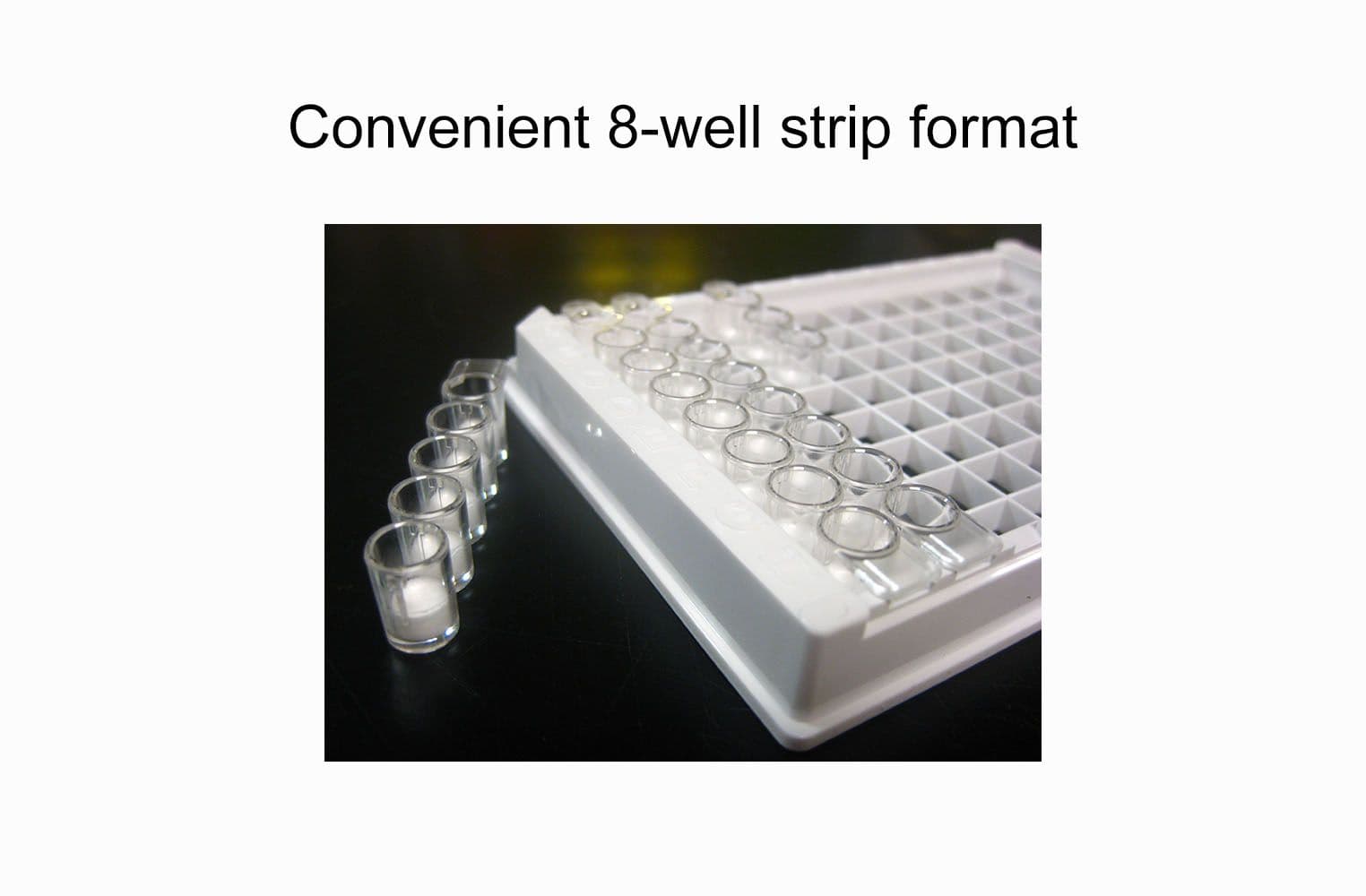
The kit contains sufficient reagents to perform 96 Ras activation assays. Since the Ras-GTP affinity wells are supplied as strips and the strips can be broken into smaller pieces, each kit can be used for anywhere from one to multiple assays. The following components are included in the kit:
- 96 Ras-GTP affinity wells (divisible into 12 strips of 8 wells each)
- Lysis buffer
- Binding buffer
- Antigen presenting buffer
- Wash buffer
- Antibody dilution buffer
- Anti-Ras antibody
- HRP-labeled secondary antibody
- Positive control Ras protein
- Protease inhibitor cocktail (Cat. # PIC02)
- Absorbance detection reagents
- Precision Red™ Advanced protein assay reagent (Cat. # ADV02)
- Manual with detailed protocols and extensive troubleshooting guide
Equipment needed
- 96-well plate spectrophotometer capable of reading 490 nm wavelength
- Multichannel or multidispensing pipettor
- Orbital microplate shaker capable of at least 200 rpm shaking (400 rpm is optimal)
Example results
|
||
|
|
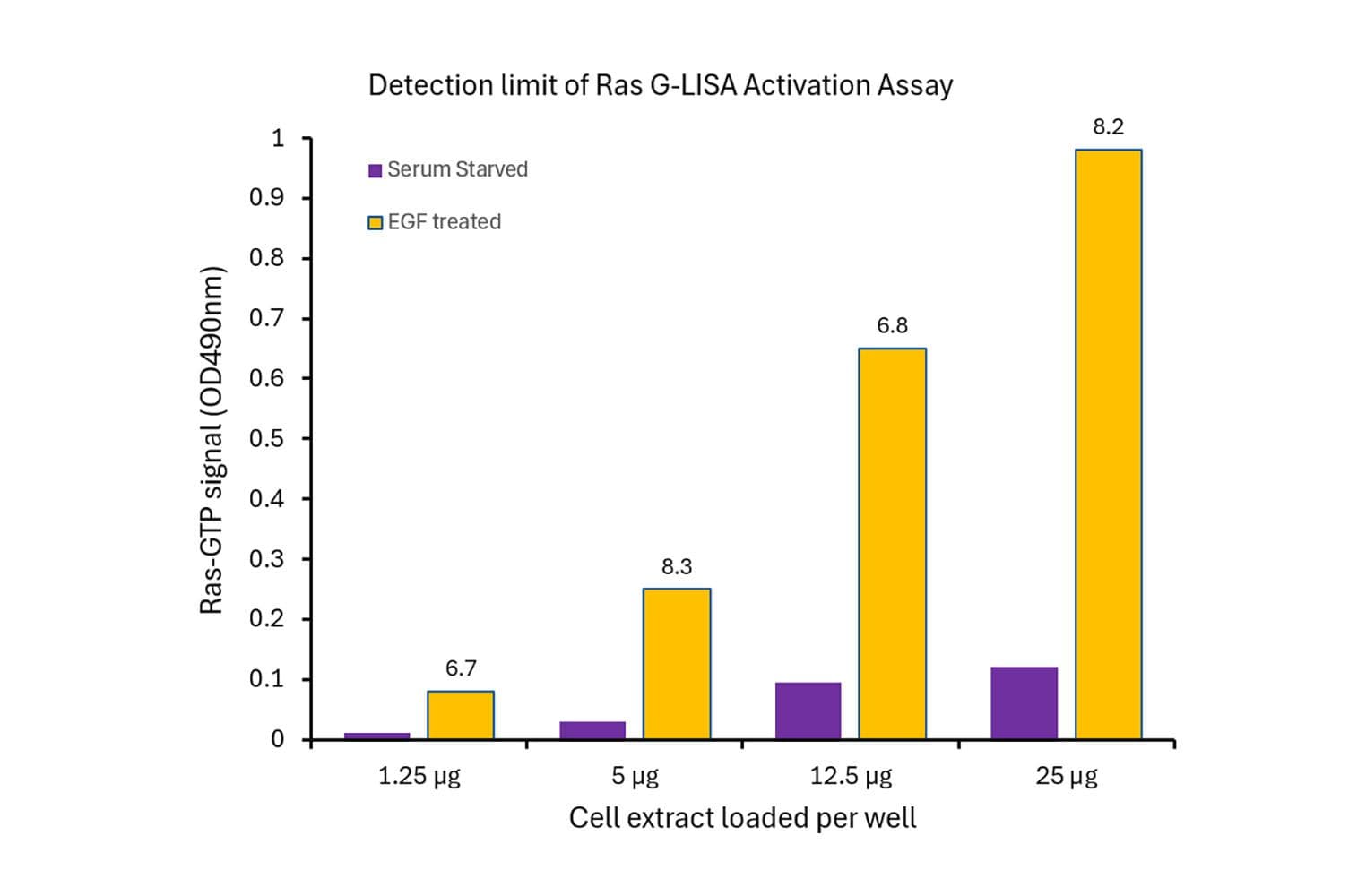
Figure 1. Ras activation by EGF measured by G-LISA™. HeLa cells were serum starved (SS) for 24 h and treated with EGF (100 ng/ml for 2 min). 25, 12.5, 5, 1.25 µg of cell lysates were subjected to the G-LISA™ assay. Absorbance was read at 490 nm. Data are background subtracted |
|
G-LISA™ Products:
Cdc42 G-LISA™ Activation Assay, colorimetric format (Cat.# BK127)
Rac1 G-LISA™ Activation Assay, luminescence format (Cat.# BK126)
G-LISA Rac 1,2,3 Activation Assay Biochem Kit (colorimetric format (Cat.# BK125)
RhoA G-LISA™ Activation Assay, colorimetric format (Cat.# BK124)
RhoA G-LISA™ Activation Assay, luminescence format (Cat.# BK121)
Associated Products:
Anti-Cdc42 monoclonal antibody (Cat.# ACD03)
Anti-Rac1 monoclonal antibody (Cat.# ARC03)
Anti-RhoA monoclonal antibody (Cat.# ARH03)
For product Datasheets and MSDSs please click on the PDF links below. For additional information, click on the FAQs tab above or contact our Technical Support department at tservice@cytoskeleton.com
Coming soon! For the most recent publications citing this product, please contact our Technical Service department at tservice@cytoskeleton.com
Coming soon! If you have any questions concerning this product, please contact our Technical Service department at tservice@cytoskeleton.com
Browse Products
You have no items in your shopping cart.
You have no items to compare.
-
5/3/122nd Annual Front Range Cytoskeleton Meeting, May 14th, 2012 Read more
-
4/30/12Functions of the actin oxidation cycle Read more